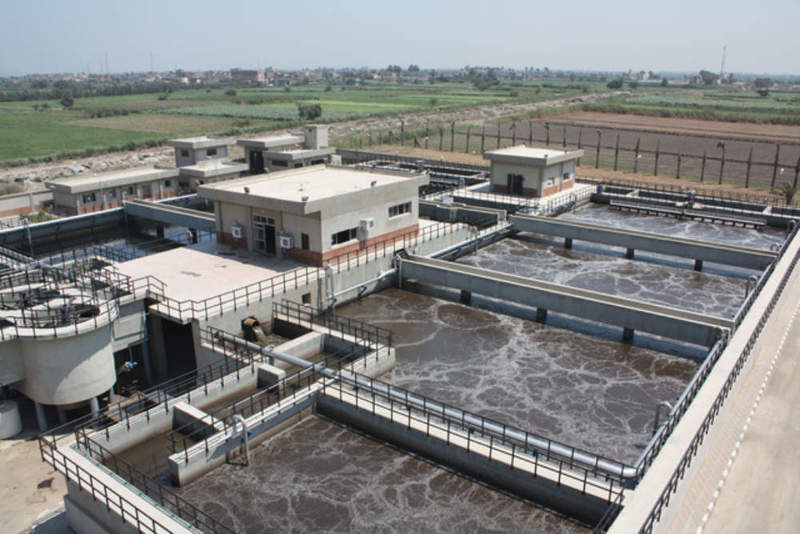
Dissolved air flotation is an elective clarification measure ideal for treating rough water with light particles, for instance, green development or concealing causing organics and at low temperatures when sedimentation isn't as reasonable.
Notwithstanding the way that dissolved air flotation (DAF) has been used for drinking water clarification in Europe since the last piece of the 1960s, it is still somewhat new or dark to many drinking water treatment specialists in North America. Wastewater treatment specialists, regardless, do see DAF as a settled slime thickening cycle that is in like manner skilled at wiping out oil and oil from present day wastewaters.
The central DAF drinking water plant in the U.S. was a 1.2-MGD DAF structure charged in Lenox, Mass., in 1982. DAF didn't get expansive in the U.S. drinking water industry until the mid 2000s with the introduction of high-rate DAF advancements. Since 2000, more than 50 drinking water treatment plants (WTP) in North America have used DAF, with limits going from 0.5 MGD to 290 MGD.
DAF is an elective clarification measure that uses smaller than expected air pockets to attach and drift flocculated particles and suspended solids to the water surface for ejection. Strangely, sedimentation wipes out settled solids from the base.

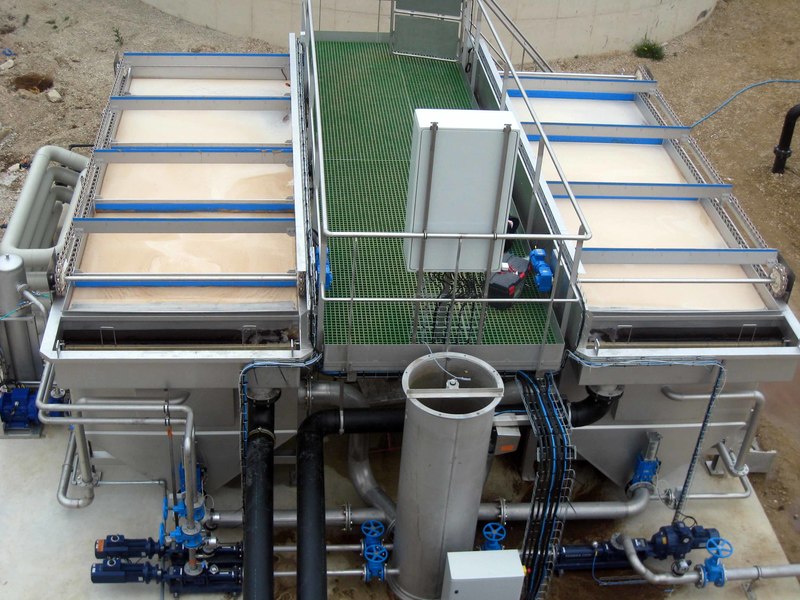
Before the flocculated water enters the clarification chamber, a large number of little air bubbles are conveyed from the diffuser spouts to the water, which affixss and coast the floc particles to the water surface. The air bubbles are created in a siphoned reuse stream by an air blower and are separated in water through a squeezed zenith sort of saturator. The coasted grime is dispensed with irregularly to a desludging box, and the disclosed water streams to the lower a piece of the disclosing chamber and subsequently to an exuding control weir for combination. The air saturator is used to separate air in the water and a short time later produce air pockets to float the floc particles.
A bit of the central great conditions of DAF consolidate better execution for taking out light particles, for instance, green development, which are difficult to settle. DAF can in like manner when in doubt achieve lower radiating turbidity than settling, generally under 0.5 NTU. It isn't as sensitive to temperature, especially cool temperatures as is fundamental in settling, and the startup time is short, around 30 minutes. Further, DAF doesn't need to make profound floc for settling, so lower coagulant estimation and more restricted flocculation time can be used. The cycle can moreover work at much higher surface stacking rates (SLR) than sedimentation, especially in the high-rate DAF measures, which can be up to 20 gpm/ft2.
With mechanical sludge removal, the DAF refuse can be exceptionally thick (2 to 5 percent solids), which executes the necessity for thickening prior to dewatering. Because of air association, polymer isn't required for stable execution, as opposed to high rate settling estimates that should use polymer to attach particles to weight. Using polymer is a huge concern if the clarification cycle is used for layer filtration pretreatment. In any case, DAF isn't proper for rough water with high-thickness solids or turbidities higher than 100 NTU, as the siphoned reuse rate required is higher, making the cycle more energy raised and less reasonable than fighting progressions. When in doubt, DAF uses more energy than sedimentation due to the reuse water siphoning and air pressing necessities, and it for the most part needs protection from freezing and coming down to hold the drifted solids back from settling.
For wastewater treatment equipment contact Applied Waste water solutions.
Comments
Post a Comment